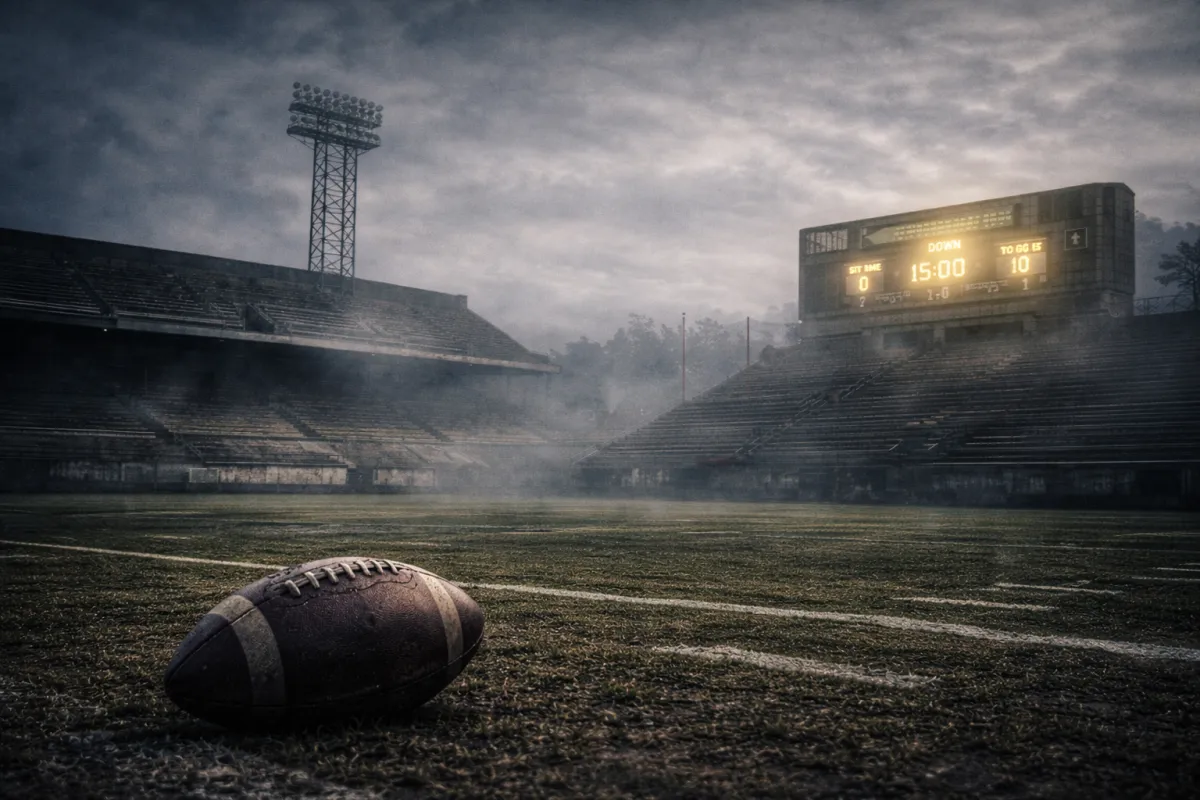
GHOST STADIUMS, REAL MEN
The places that built football’s backbone.
There are stadiums that still stand.
And there are stadiums that exist only in memory.
Concrete bleachers. Iron railings. A scoreboard that hummed more than it worked. These weren’t entertainment complexes. They were civic proving grounds.
A stadium used to belong to a town, not a broadcast contract.
Saturday Was a Statement
In smaller markets, football wasn’t an event — it was identity.
Factories emptied early. Barbershops debated matchups. Kids played catch in alleys wearing numbers they hoped to earn someday.
When the team won, the town stood taller Monday morning.
When they lost, it hurt — but it belonged to them.
The Men Who Played for a Living
Before endorsement deals and pregame tunnels became fashion runways, men played football because it was a trade.
It required skill. Pain tolerance. Precision. Pride.
And in those ghost stadiums, reputations were earned the old way: slowly.
There were no viral moments. Just film, word of mouth, and respect.
The Legacy That Remains
Modern stadiums are larger. Louder. Brighter.
But the backbone of the sport was forged in places that didn’t need spectacle to matter.
And that backbone still shows up today in disciplined teams, hard practices, and players who treat preparation like a craft.
When you walk into a stadium now, remember: it was once simpler — and heavier.
Join the Aficionado List
For heritage-driven essays and limited print access, become part of the lineage.
